
MRI
MRI is a valuable diagnostic imaging technique that is used as part of a lameness examination.
MRI scans produce highly detailed anatomical images of the bone and soft tissue structures of the area being examined.
In-house laboratory
We run our own in-house laboratory, manned by two members of our team and in use 24 hours a day.
Most routine samples can be tested in-house, and results are normally available on the same day.
When more complex testing is required, we may need to send these away to external labs. However, our vets are able to interpret the results and advise on appropriate treatment.
We can also perform in-house cytology and can carry out culture and sensitivity on bacterial samples.
Digital x-ray
We have a modern digital radiography (x-ray) system, allowing us to view radiographs immediately after they are taken.
Our highly skilled team will assess your horse’s radiographs and advise on suspected diagnoses and associated treatments. Our dedicated equine veterinary nurses will usually visit your premises with your vet, to assist in safely taking x-rays.
Ultrasonography
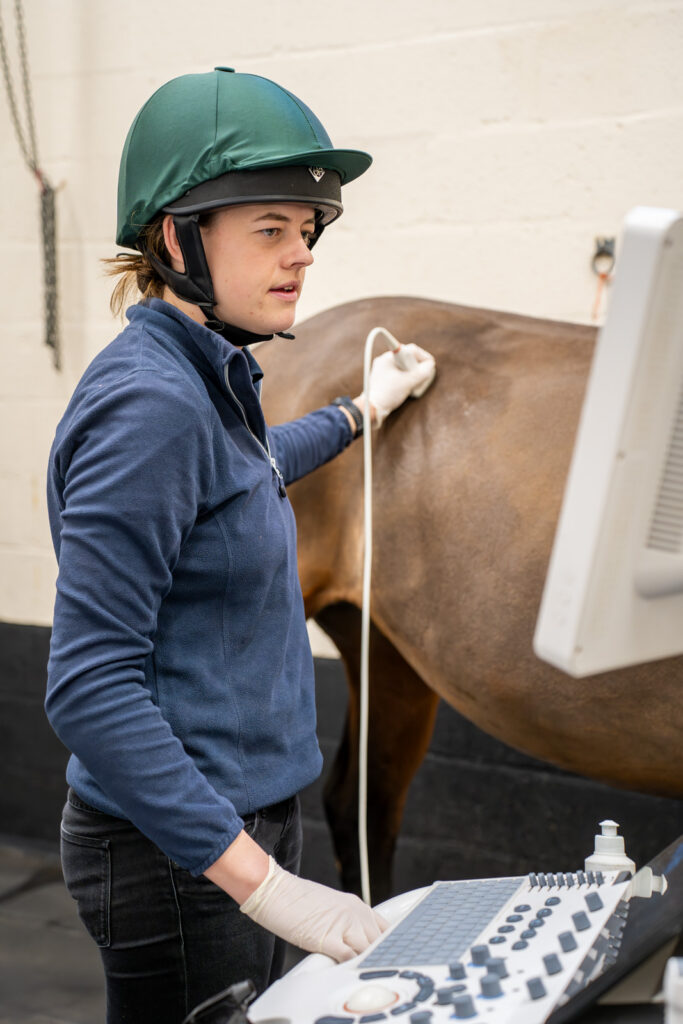
We have a large range of ultrasound scanners, including the latest digital systems.
Ultrasonography can be used to image soft tissue structures, such as tendons and ligaments, and the abdominal and thoracic cavities.
It is widely used in stud medicine for imaging the ovaries and uterus.
We have a number of portable scanners, which means that most scans can take place at clients’ stables.
We can also arrange for visiting equine medical specialists to perform particular examinations such as cardiac scans.
Endoscopy
We have videoendoscopes at our veterinary hospital for visualisation of the trachea, oesophagus, bladder, uterus, sinuses and stomach.
We also have two portable endoscopes, which can be used to examine the larynx and trachea at clients’ stables.
Overground exercising endoscopy
We offer mobile, overground endoscopy, which allows us to assess a horse’s airway during exercise.
The equipment can be attached to the horse’s tack and helps us to investigate problems such as respiratory noise and poor performance.