
Our internal medicine services include, but are not limited to:
- Oncology.
- Neurology, including head-shaking and percutaneous electrical nerve stimulation (PENS) therapy.
- Ophthalmology.
- Cardiology, including telemetric ECG and echocardiography.
- Foal medicine.
We are also able to treat conditions such as:
- Muscle disorders.
- Respiratory disease.
- Endocrine disorders and laminitis.
- GI disorders (recurrent colic, ulcers, diarrhoea, weight loss).
- Infectious disease and biosecurity.
- Hepatic and renal disease.
Equine cardiology
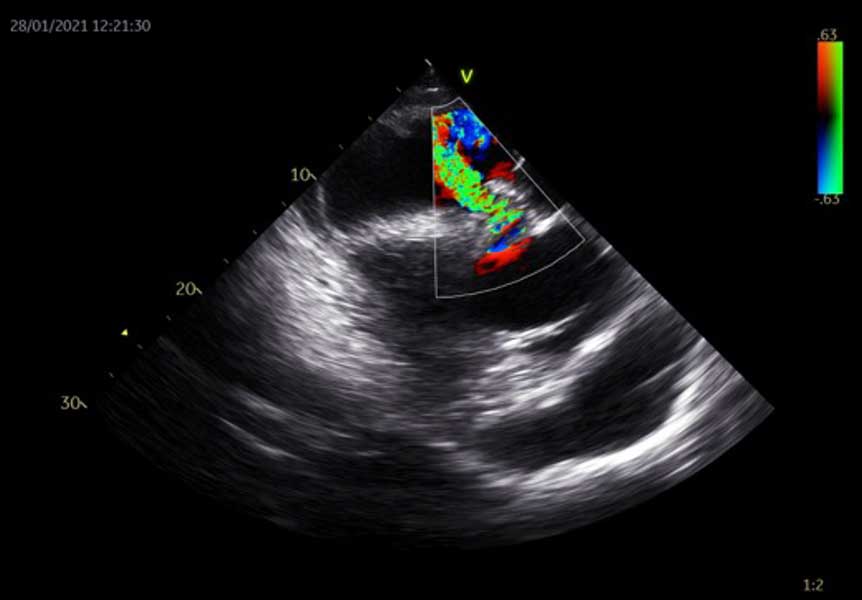
Using mobile ultrasound technology, alongside ECG equipment, we are able to investigate cardiac murmurs when they are detected, whether as part of a routine examination, such as a pre-purchase examination, or when assessing horses with poor performance.
We are also able to provide treatments for horses with atrial fibrillation, an important cause of poor performance in the horse.
Cardiac ultrasound
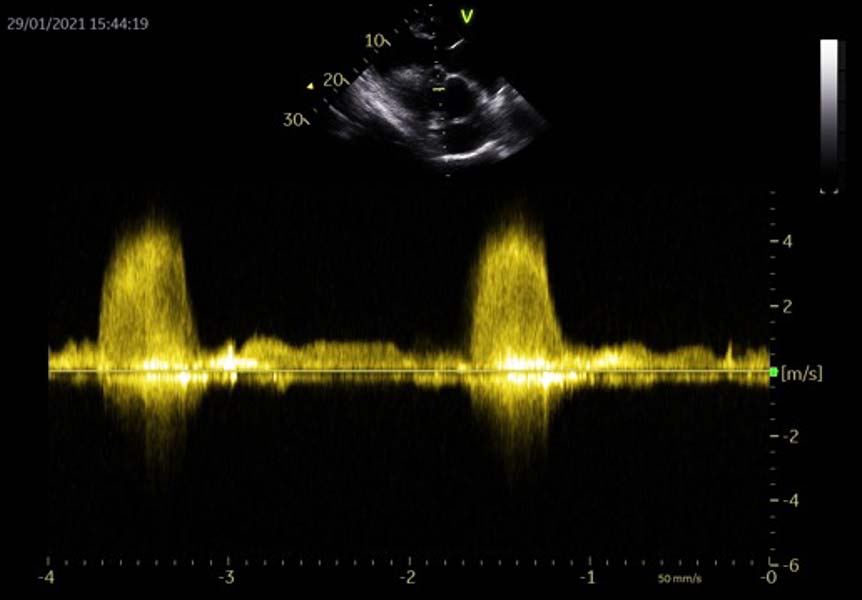
Cardiac ultrasound (echocardiography) allows us to evaluate the structures of the heart, as well as how blood flows through them.
ECG
Electrocardiography (ECG) recordings provide a valuable insight into the cardiac electrical activity that coordinates cardiac function.
By recording the ECG both at rest in the stable, we are able to identify occasional changes that may become more clinically significant over time or those that might impact on the safety of further ridden exercise.
Atrial fibrillation
Atrial fibrillation is an important abnormality of the heart that can cause poor performance, particularly in competition horses.
An ECG is required to confirm a diagnosis.
In horses competing at low levels, atrial fibrillation usually doesn’t cause a problem; it is important to ensure that the ECG remains stable during exercise.
Traditionally, atrial fibrillation was treated with drugs; however, a more recent technique, transvenous electrocardioversion (TVEC) provides an alternative and often safer approach to management of this condition.
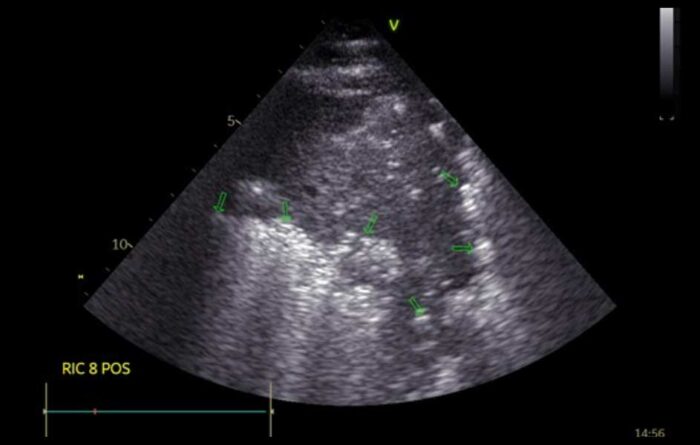
By placing wires in the heart under ultrasound guidance, our clinicians are able to place the wires across the heart.
Once the wires are safely placed, the horse is anaesthetised to deliver the shocks to its heart.
Equine respiratory medicine
Our team can use endoscopes to assess the respiratory system at rest, and during exercise.
This provides valuable information about how the airway functions and changes during exercise.
Thoracic radiography allows us to visualise disorders in the horses’ lungs, and is often combined with ultrasound to map specific lesions.
Ultrasound normally allows us to only evaluate the surface of the lungs, but in some cases, we can evaluate lung pathology such as abscesses and work with our specialist surgeons to remove areas of affected tissue or drain these as required.
Equine ophthalmology
Vision is a vital part of our horses’ lives, but the location of the eyes on the side of the head and their lifestyle make them prone to injury.
Our team has experience in the management of complex disorders of the cornea, including penetrating injuries and the local injection of medication to remove clots from the eyes.
The iris, the pigmented part of the eye that surrounds the pupil, contains multiple structures, often at the top of the pupil, but horses can develop large iris cysts that sometimes impact vision.
We are able to assess these and remove them using a minimally invasive procedure while your horse is standing.
Our team is also able to offer a second opinion on findings identified during pre-purchase examinations, such as cataracts.
Cataracts are any opacity in the lens of the horse, and while these can be disconcerting, many of them do not progress.
Using high-frequency ultrasound, together with a slit lamp examination, we are able to identify and characterise cataracts and advise about suitability for purchase.
Surgical options exist for the management of cataracts, and we would be happy to advise about this when it is appropriate.